
This is the first post in a new series I’m calling Where Team USA Handball Took Me. I travel for two different reasons these days: my own trips, planned months out and built around sunrise light, and national team trips, planned by someone else, around a schedule I don’t control. This series is about the second kind — what a country actually looks like when you’re there to compete, not vacation.
Morocco is where this series started to make sense to me. I didn’t see Morocco. I saw a gym, a hotel, the bus route between the two, and whatever fit into the cracks around that.
Morocco sits at the northwest corner of Africa, with an Atlantic coastline on one side and a Mediterranean one on the other, and the Atlas Mountains running through the middle of the country. It’s also a country that has been investing heavily in sport infrastructure and hosting international competition, which is part of why a trip like this was possible at all.
That backdrop mattered even though I barely touched it. Knowing where you are — even from a bus seat or a hotel window — changes how a trip sits with you afterward, which is part of why I wanted to write this series down while it’s fresh instead of letting it blur into just another travel week.
The Schedule, Honestly
International competition trips run on a rhythm that has nothing to do with tourism. There’s a travel day, spent almost entirely in transit and adjusting to a new time zone. There’s at least one walkthrough or shootaround on the practice court, timed to get the team’s legs and eyes used to a facility none of us had seen before. There’s the match or matches themselves, plus the recovery windows built around them – ice, stretching, treatment tables. And there are team meals, scheduled at set times, because a national team doesn’t leave nutrition to chance.
Jet lag alone eats into the math. Landing in a new time zone a day or two before you’re expected to perform means the earliest hours of a trip often go to sleep, not sightseeing — a real cost most travel writing about competing abroad skips entirely.
Add it up and the honest constraint is this: across several days in the country, the time that wasn’t already claimed by the team schedule came out to somewhere under six hours, total. Not six hours in a row — six hours scattered across the whole trip, in pieces small enough that you stop waiting for a bigger block and just use what you get.
The Four to Six Hours I Actually Had
None of that time arrived as one clean afternoon. It came as a forty-minute gap between the shootaround and the pre-match meal, a stretch of a morning before a bus call, whatever was left after treatment.
That’s not a complaint, and I’m not going to dress it up as a souk-crawling adventure it wasn’t. This is the actual shape of competing abroad, and it’s worth saying plainly.
What Athletes See That Tourists Don’t
You see a country differently when you’re there to compete. You come in through the loading dock or the athlete entrance, not the front gate. You end up knowing a practice court’s lighting and floor grip better than you know the skyline outside it. Team meals are built around what the coaching and medical staff want on the plate before or after a match, not around what looks good on a menu – protein, carbs, hydration, repeated on a schedule. Recovery happens in shared spaces in a way it never does for a tourist: physio tables in a converted meeting room, ice on a knee in the hotel lobby, a teammate stretching against whatever wall is nearest because that’s the wall that was there.
There’s also a version of team culture that only shows up on the road: the strength staff scouting a local gym for extra lifting space when the hotel gym isn’t enough, the equipment manager figuring out laundry logistics in a country where nothing is labeled in English, the quiet triage of who needs treatment first. None of that makes it into match highlights, but it’s most of what a trip like this actually is.
You also end up sharing a hotel breakfast room with the team you’ll play that night, which is its own strange, quiet kind of familiarity — nodding at people across a buffet a few hours before competing against them. And a lot of the sightseeing happens through a bus window: you watch a city go by at fifteen miles an hour on the way to and from the venue, which is a real way of seeing a place, just not the way a guidebook describes it.
One Thing Worth Returning For
Every trip like this leaves behind a specific, nagging idea of what I’d do if I came back with actual days instead of hours.
It’s a strange kind of travel wish list — built not from photos I saw online, but from things I caught in peripheral vision on the way to somewhere else.
The Photographer’s Hour
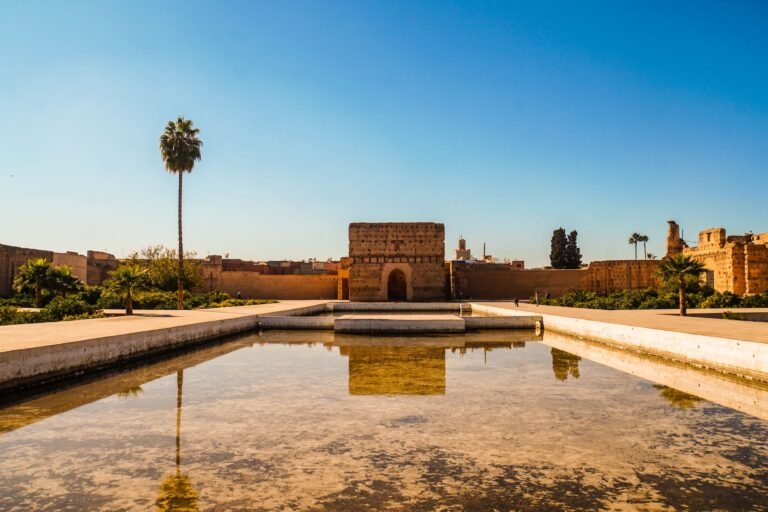
There was one window on this trip where I had the camera out and nothing else to be doing – no bus call, no treatment, no meal on the clock.
That’s the photographer’s hour in this kind of travel: it isn’t scheduled, it’s found, and you take it the moment it opens because you don’t know when the next one will.
More From This Series
This is the first entry in Where Team USA Handball Took Me — Paris and San Juan are next. For the fuller picture of how I ended up building trips around a national team schedule in the first place, that’s on my about page. And if Morocco is on your own list, I’m building out a proper destination guide for it here — check back as it fills in, or browse the wider Africa guides. Before you go, my trip-prep worksheet and the full itineraries page are good places to start planning.
Leave a Reply